

The ETH Shanghai upgrade is one of the most anticipated crypto events in 2023.
Can Rocketpool leverage their liquid staking to drive $RPL to new heights??
Part 7 of my Deep Dive series.
The purpose of this deep dive series is to analyse a number of popular projects and rank them against a set framework. I outline my DYOR framework below.


This is a special thread as its my first collaboration series I have worked on with the great team from @CryptoEQ .
As I complete each project, I will update and track scores on my google sheet. You can view it for free below.
https://docs.google.com/spreadsheets/d/1mPGbrsSEqBCN4lTVIIfdu3UzhZVqGP6LWMXlJrWJ5RE/edit?
These scores are my individual views only. CryptoEQ has only assisted with the research part of this thread.
Let’s dive in…..
Price = $42
Market cap = $806m - Rank 59
Ethereum
All time high = $59.46 (-28.5%)
All time low= $0.00884718 (+480,449.7%)
All eyes are on the next major Ethereum upgrade -Shanghai which is set to take place in March 2023.
If the upgrade is successful, then ETH can be unlocked from these staking contracts for the first time. One of the hot narratives leading up to Shanghai is Liquid Staking Derivatives (LSD). Take a look at this article by CryptoEQ on LSDs.
https://www.cryptoeq.io/articles/shanghai
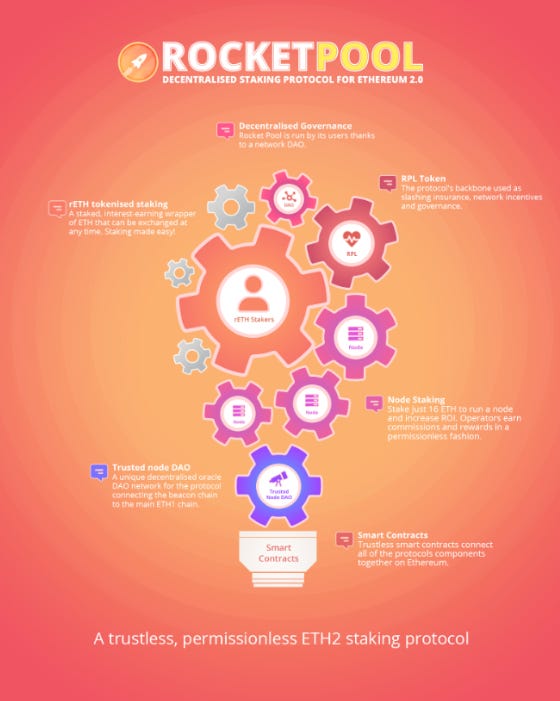
@Rocket_Pool is currently the 3rd largest LSD by TVL and also one of the first to be conceived in 2016. Focusing on permissionless nodes and decentralisation. It caters for two groups of users.
Tokenised staking using rETH
Stake ETH and run a node
Revenue
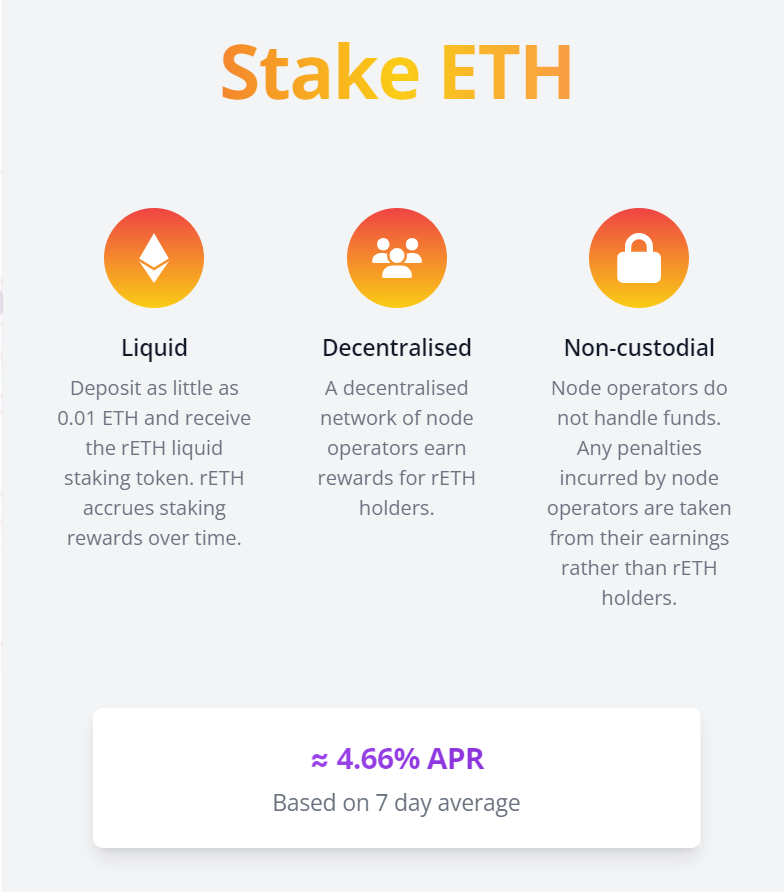
For simple staking, you will need a minimum of 0.01 ETH to deposit. Currently you can receive a 4.66% APR.
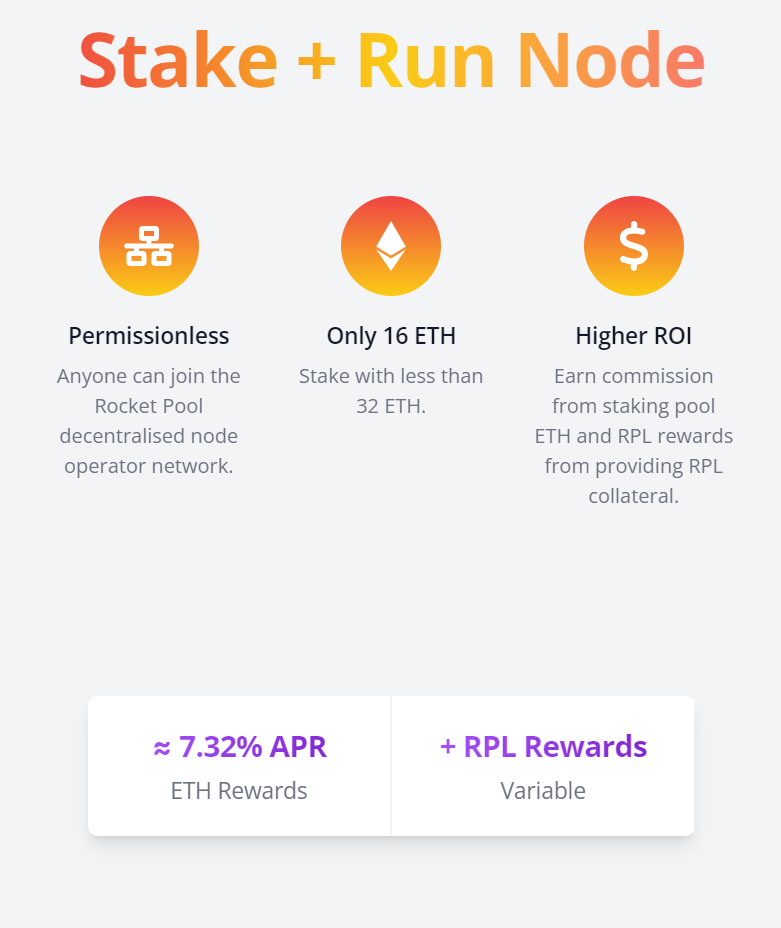
However, you can get higher APRs if you want to run a node, as you will receive commissions and also boost your rewards by providing RPL as collateral. Currently you can receive 7.32% APR paid in ETH rewards and 9.56% APR in RPL rewards.
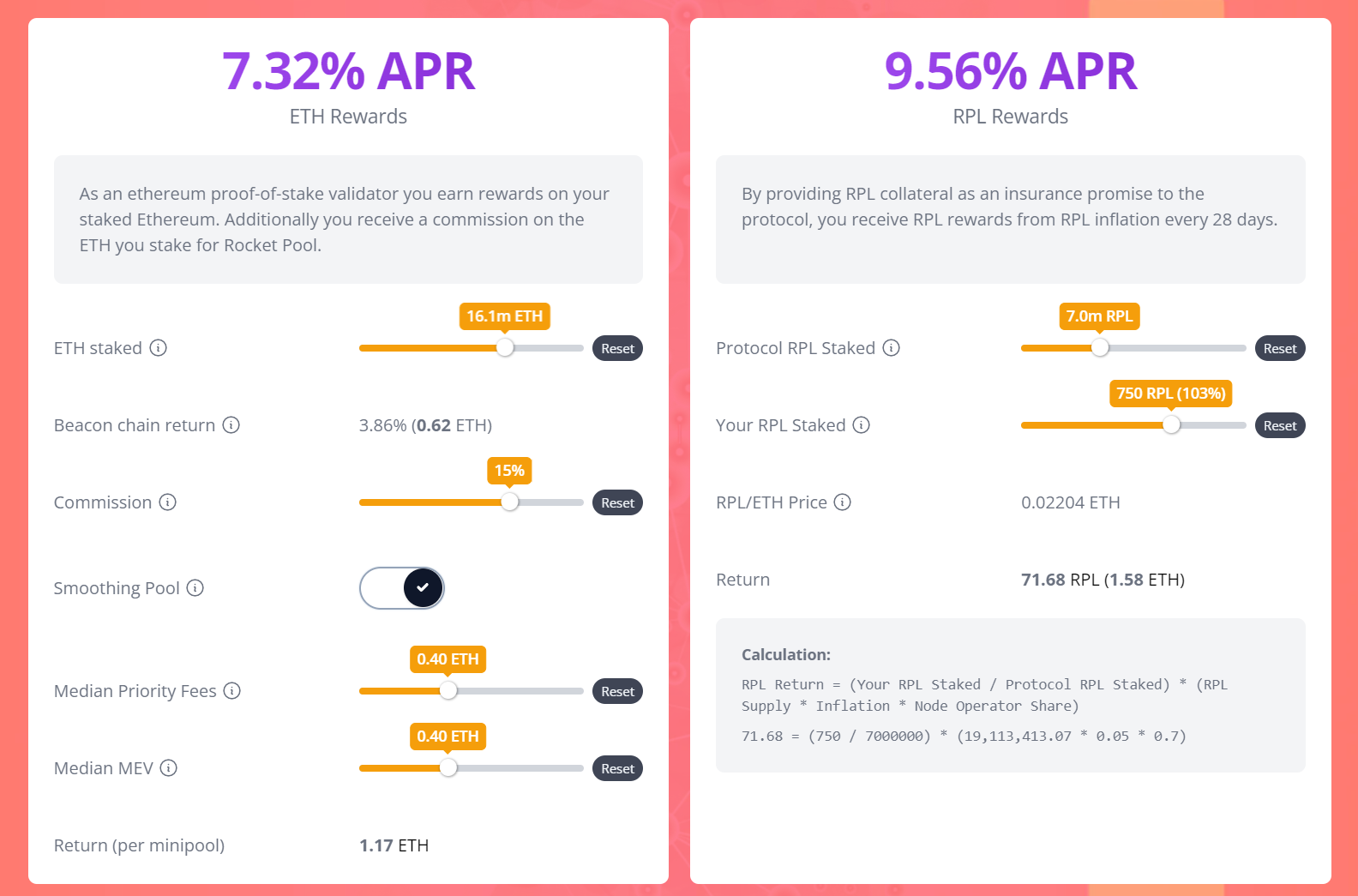
There are a number of factors that will affect this APY
Beacon chain return % will decrease as more ETH is staked
RPL rewards will decrease as more RPL is staked
ETH Gas costs to run node
You can play around with the RPL calculator.
https://rocketpool.net/node-operators
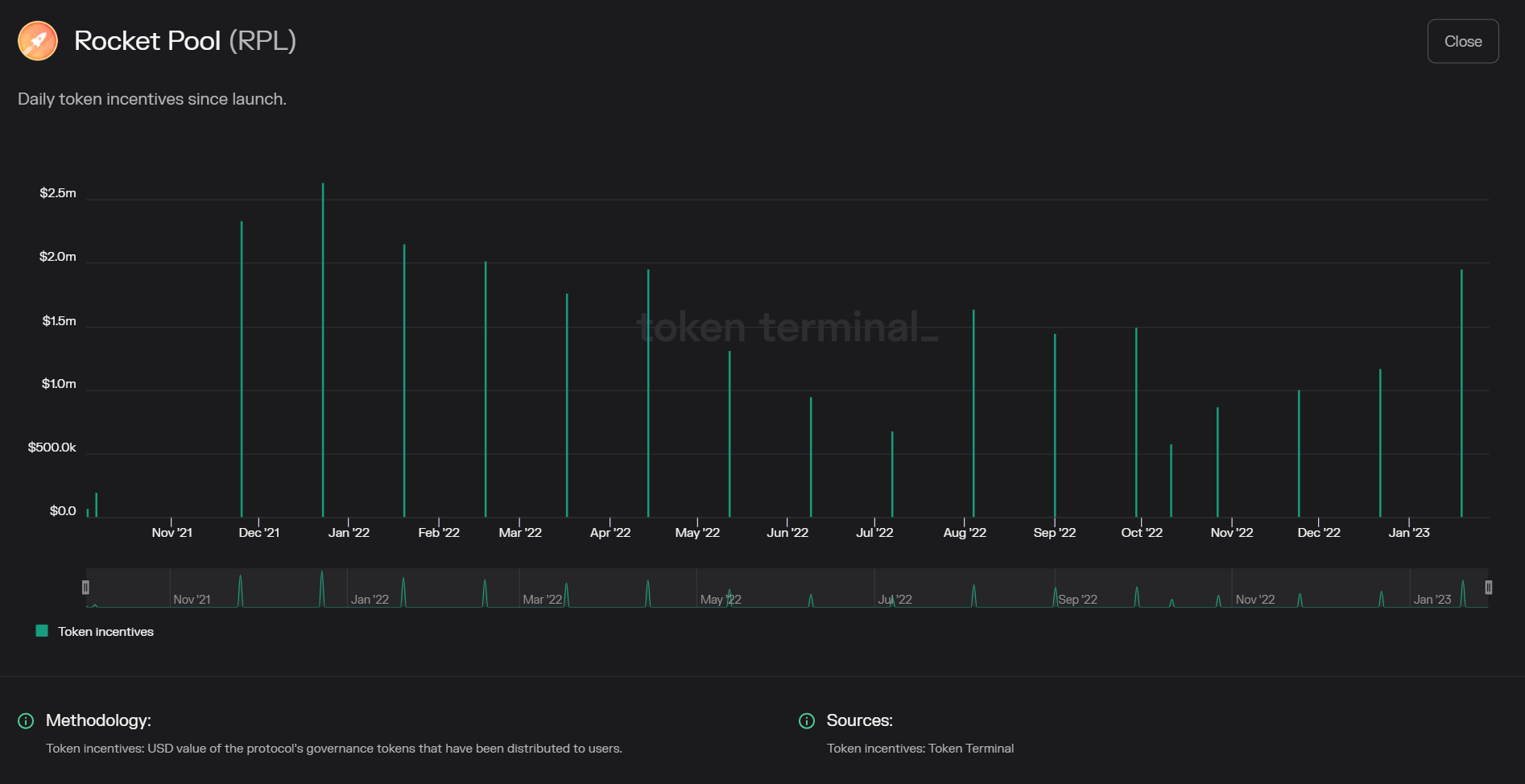
According to token terminal, RPL has paid out around $2m in token incentives for the month of January- fairly consistent numbers over the last 12 months.
7 for Revenue.
Treasury
15% of the inflationary RPL tokens per month are allocated each to the Protocol DAO and Oracle DAO treasury. As of Month 15 in the issuance schedule (now) and current RPL prices
Protocol DAO= 1.377m RPL= $47.8m USD
Oracle DAO= 1.377m RPL= $47.8m USD
The two DAOs serve the following purposes.
The protocol DAO (pDAO) is composed of all RPL token holders and Its purpose is to be make decisions on key protocol settings through governance votes
RPL Inflation
RPL Rewards
RPL Auctions
Nodes
Network
Deposits
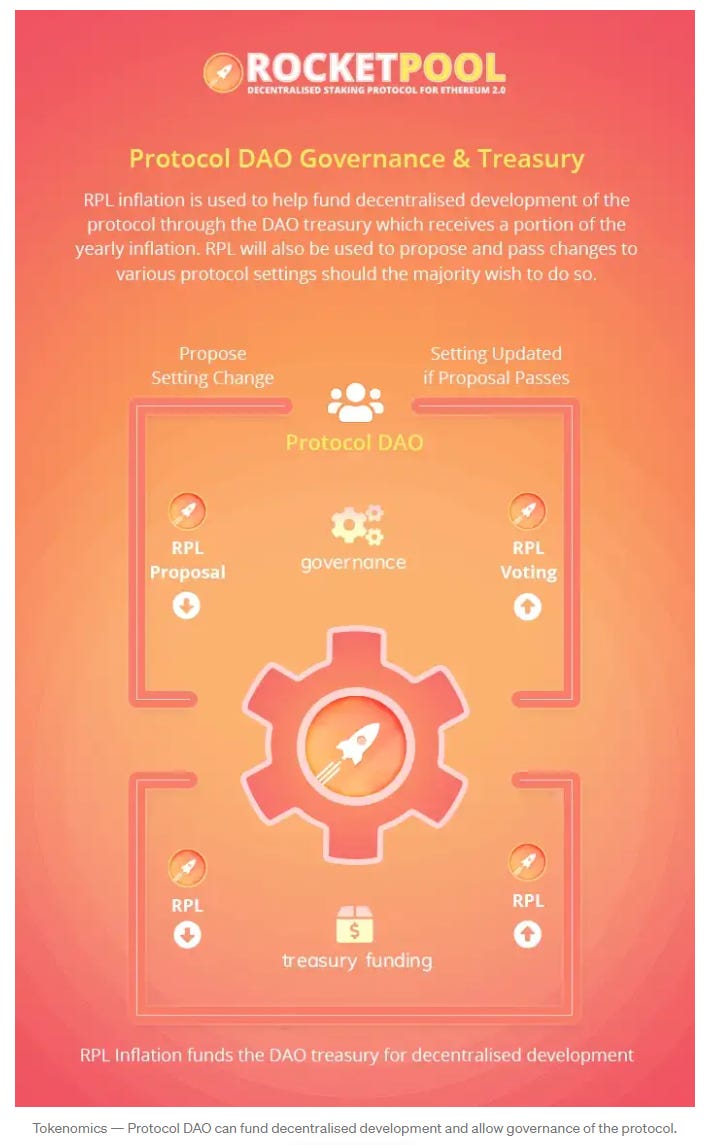
The oracle DAO (oDAO) is made up of a smaller group of oracle node operators and team members. There are around 15-20 paid positions. Their purpose is to maintain minipool validator balances, RPL:ETH ratio and protocol liveliness amongst other duties.
There isn't any information I could find around the composition of both treasuries. If they are both held in the native RPL token, this poses diversification risks. However, it's a decent sized treasury relative to RPLs marketcap.
8 for Treasury.
Tokenomics
According to Rocketpool, these are the current supply stats
Circulating supply = 19.1m
Total supply = 29.6m
Market cap = $806m
65% in circulation
Rocketpool implements a 3 token system with the following mechanics
RPL- Governance & rewards
rETH- Liquid staking derivative
ETH- 1 rETH is redeemable for 1 ETH
In 2021, the $RPL tokenomics had a revamp and a new token contract was released (RPL v2).
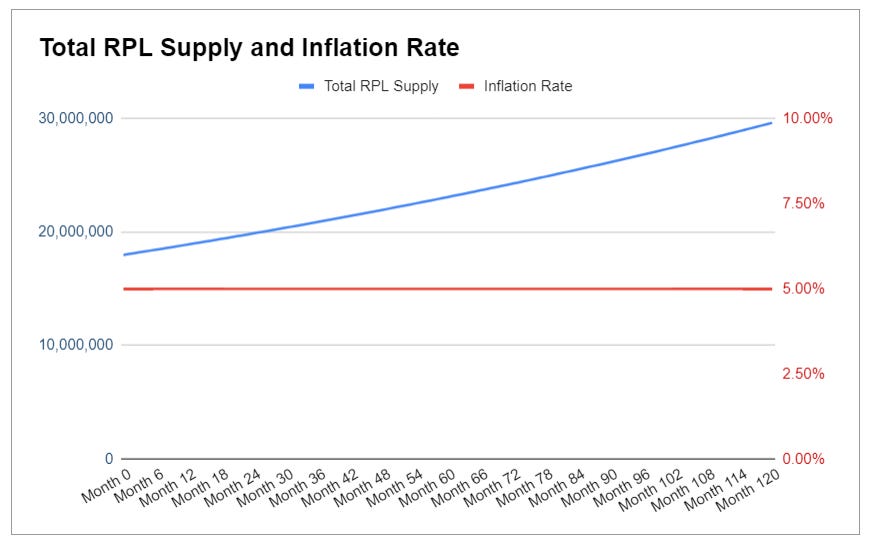
The main change was to make the token inflationary in order to provide incentives and rewards to node operators. The initial inflation rate is set as 5% pa and will be split up amongst.
Node Operators staking RPL as insurance collateral (70%)
Oracle DAO members providing various oracle data (15%)
Protocol DAO Treasury to fund decentralised development (15%)
There is a fixed total supply of tokens that will be emitted over 120 months.
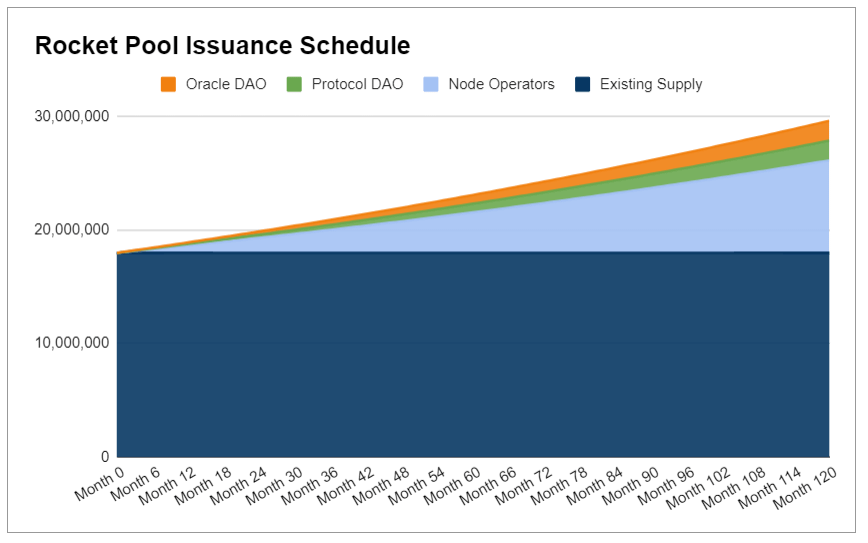
Important to note that the Protocol DAO can vote to change the inflation rate in the future. For more detail you can look at the free calculator RPL provides
https://docs.google.com/spreadsheets/d/1Wl3EukDALcd8nBQQkMhzXr5WfwmEj264YPfch9AJN30/edit#gid=0
8 for tokenomics.
Locked up funds
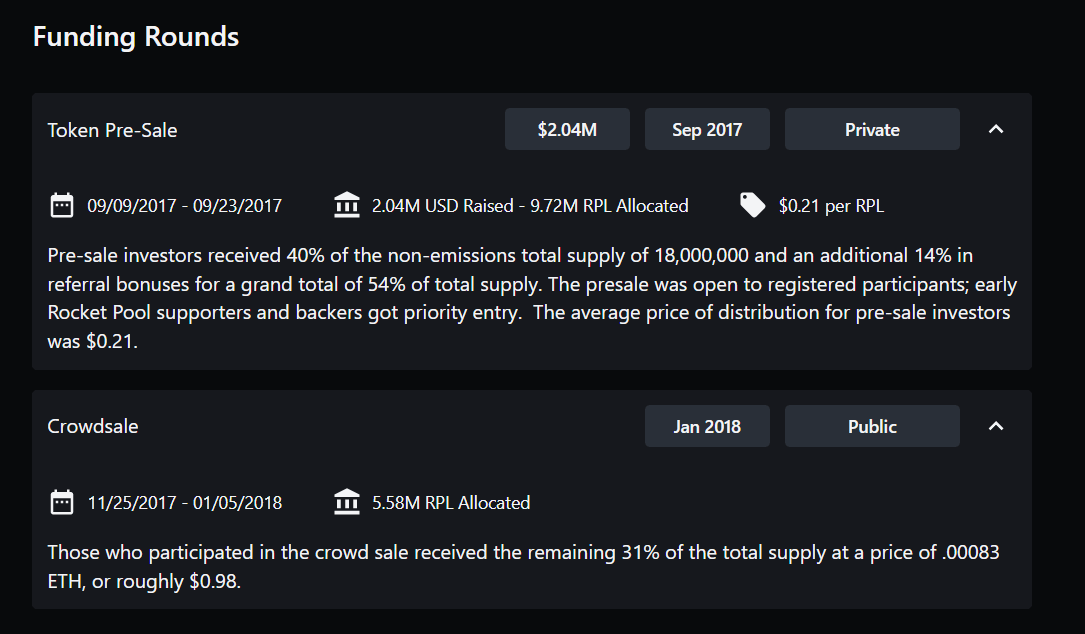
There was an initial supply of 18m RPL tokens minted and distributed to project team, investors and as rewards/ airdrops. As you can see below, there was 54% allocated to investors which is a bit of a concern.
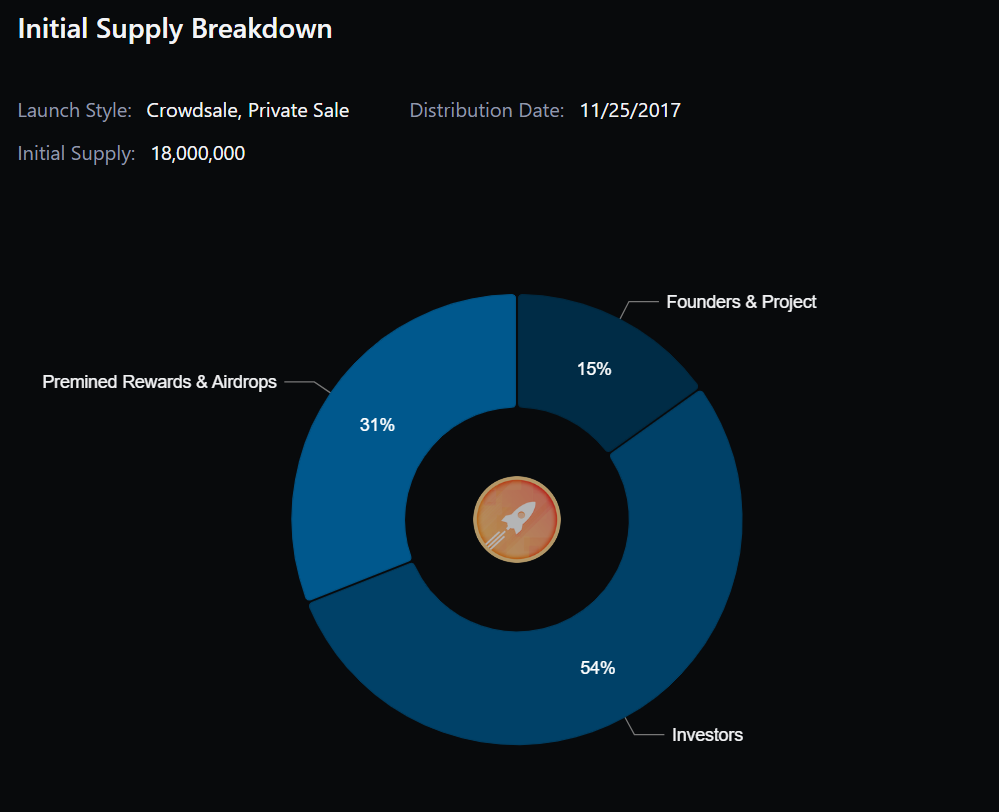
All of the initial 18m tokens have been unlocked, with only the inflationary emissions tokens to be created over the next 120 months. So no crazy vesting cliffs to be worried about.
By locking up your RPL as collateral when setting up a node, you can earn increased rewards. This is a clever way to incentive locking up RPL tokens and reducing selling pressure, thus increasing price potential.
7.5 for locked up funds.
Use case
Ethereum is by far the largest and most widely used smart contract cryptocurrency. With the transition to Proof of Stake, there is now an incentive for holders of ETH to stake their tokens, secure the network and also receive a yield of around 3-6% APY.
However, there are some downsides to staking ETH
It's not easy to run your own validator node
Tokens are locked and illiquid
Rocketpool aims to solve this by making setting up a validator node easy whilst also providing the benefits of liquid staking.
Several LSD projects have been launched to solve this same problem by allowing smaller holders of ETH to stake/ run nodes and also allow them to still participate in DeFi through liquid staking tokens.
Lido = stETH
Rocketpool = rETH
Coinbase = cbETH
Frax = frxETH
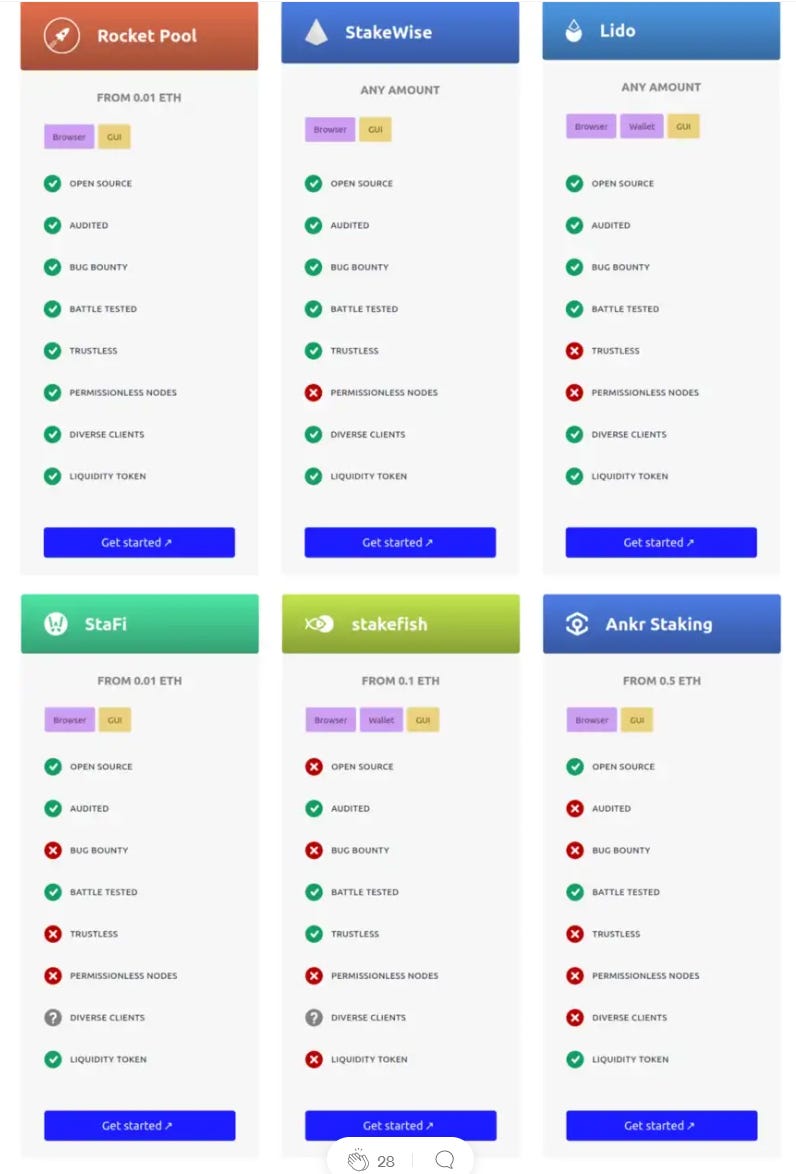
Rocketpool has been one of the most popular LSDs- with Binance recently listing the token for trading. It has several benefits over other LSDs
Node operators only need to stake 16 ETH (Not 32)
Focus on decentralisation
Permissionless nodes
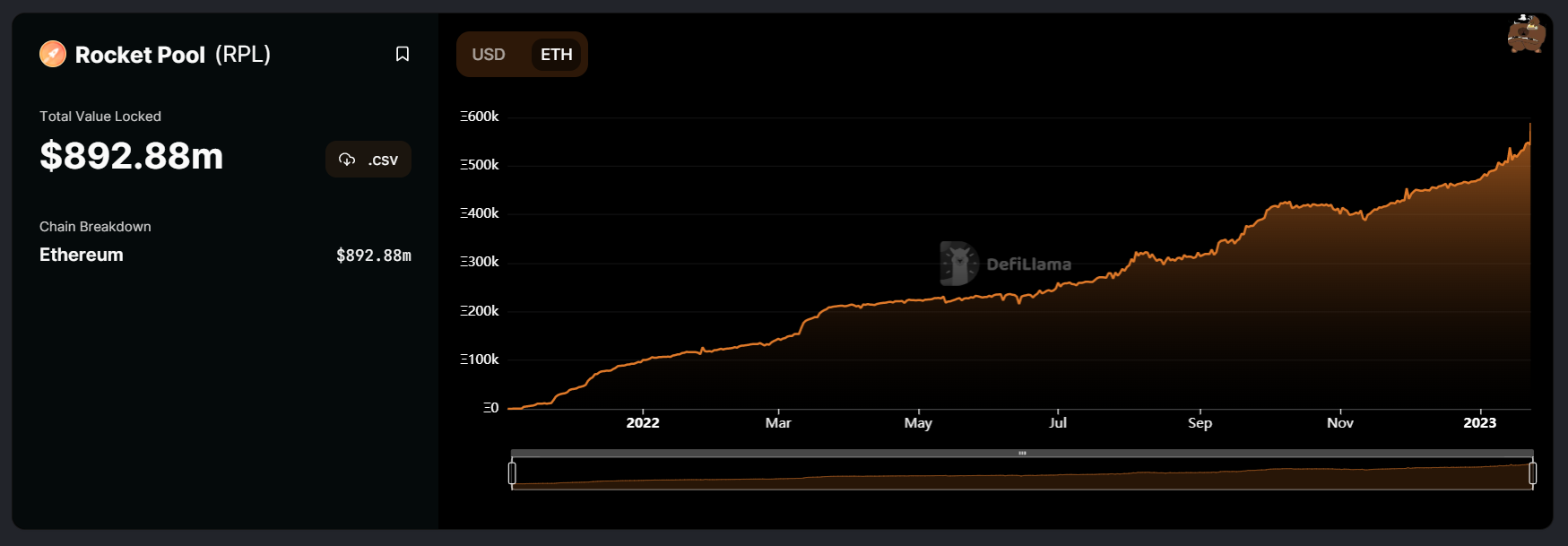
The TVL of Rocketpool has been steadily growing all throughout 2022. A successfull Shanghai upgrade could increase this even further as people have the confidence that their ETH can be un-staked.
8.5 for Use case.

Roadmap
2022 was a big year for the team with the ETH 2.0 merge in September. The below roadmap is the latest version I can find from the team's documentation.
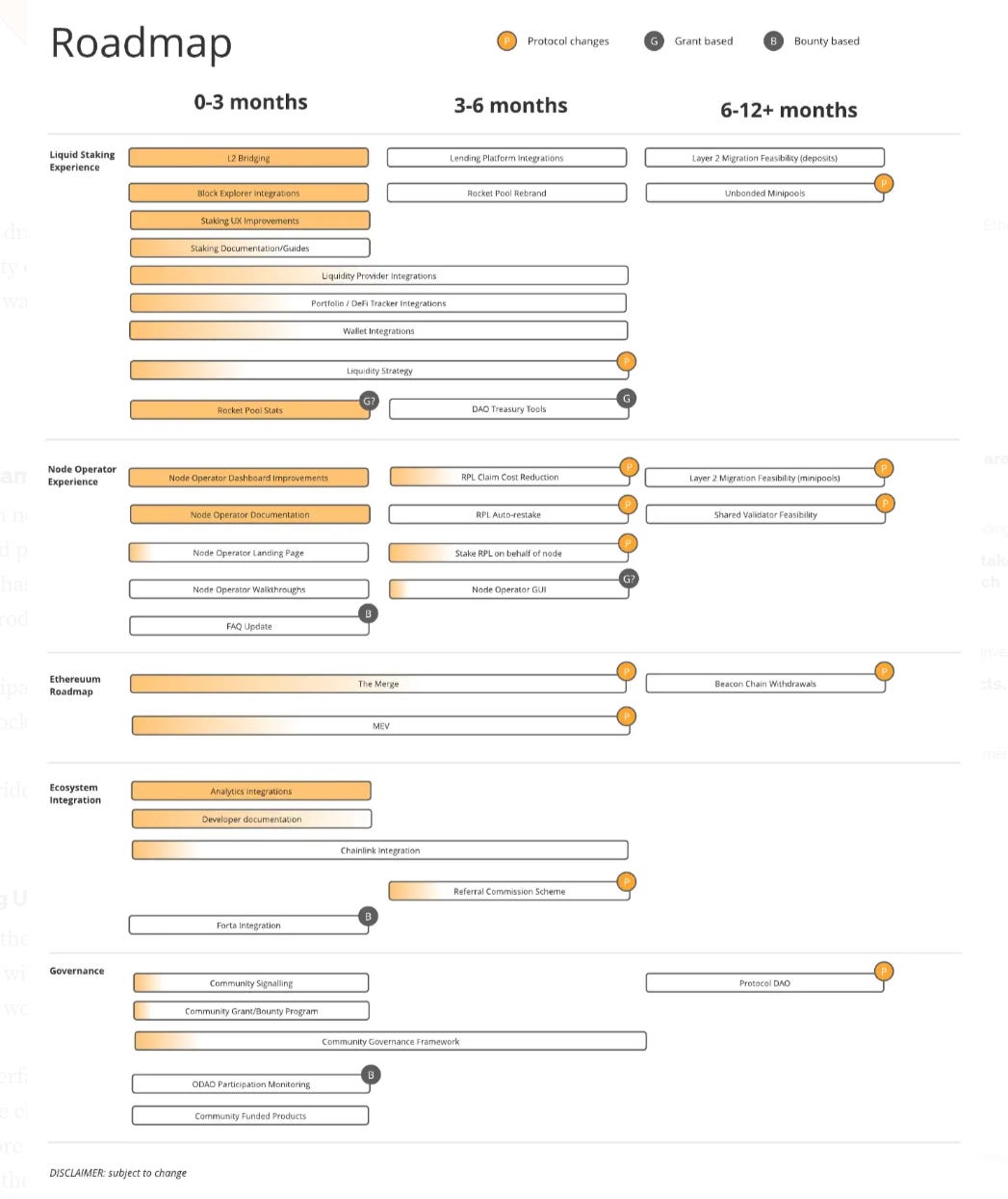
Some significant milestones for 2023 include
Beacon chain withdrawals (March)
Unbonded min-pools
Various DeFi integrations
8 for Roadmap.
Team & funding
The project was founded in 2016 and some notable members/ contributors include
David Rugendyke- Rocket Pool Founder, CTO
Darren Langley- General Manager
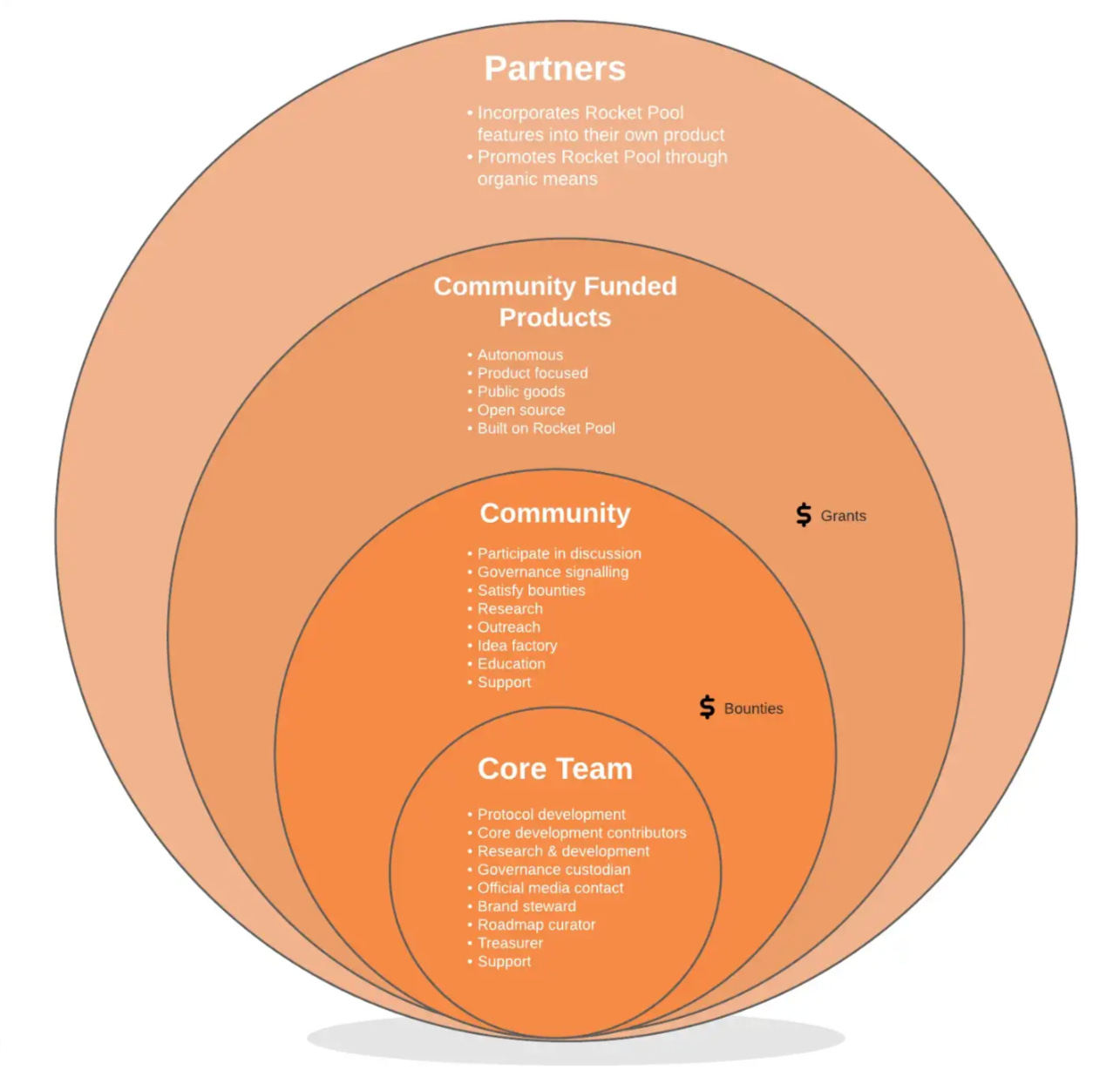
Rocketpool is a community-driven decentralised protocol with the overall structure as below.
I love the project even more after finding out the team is based in my hometown of Brisbane- Australia. It is a small world!! There were a few funding rounds in 2017/ 2018 and the key investors in the project were ConsenSys and KR1.
8 for Team & funding.
Summary
TLDR summary for each category’s score out of 10.
7 - Revenue – RPL token incentives are strong
8 - Treasury– ~$100m USD in treasury- 2 x DAOs
8 - Tokenomics – 5% inflation, fixed total supply
7.5 - Locked up funds – 65% tokens in circulation
8.5 - Use case – Strong Liquid staking narrative
8 - Road map – Shanghai upgrade March ‘23 is key
8 - Team/ funding – Strong team and funding
Rocketpool gets a 7.9 weighted average score.

Overall, I am very impressed with the project and their emphasis on permissionless staking, decentralisation and ease of use. I would have to say Rocketpool and Frax are my two favourite LSD plays. Lido is also up there but with some centralisation concerns.
The purpose of this thread is for education and research, not investment or financial advice. The current macro conditions are still very choppy with the risk of recession in 2023 and a tightening Fed so please be cautious out there frens.
This thread was developed in collaboration with CryptoEQ- one of the leading independent cryptocurrency analysis and rating agencies. Check out the team's detailed research article which has just dropped!!


Tagging some accounts…..
Appendix- useful links
https://docs.google.com/spreadsheets/d/1Wl3EukDALcd8nBQQkMhzXr5WfwmEj264YPfch9AJN30/edit#gid=0